

























How Do the Brush, Squeegee and Tanks Work Together in a Floor Scrubber?

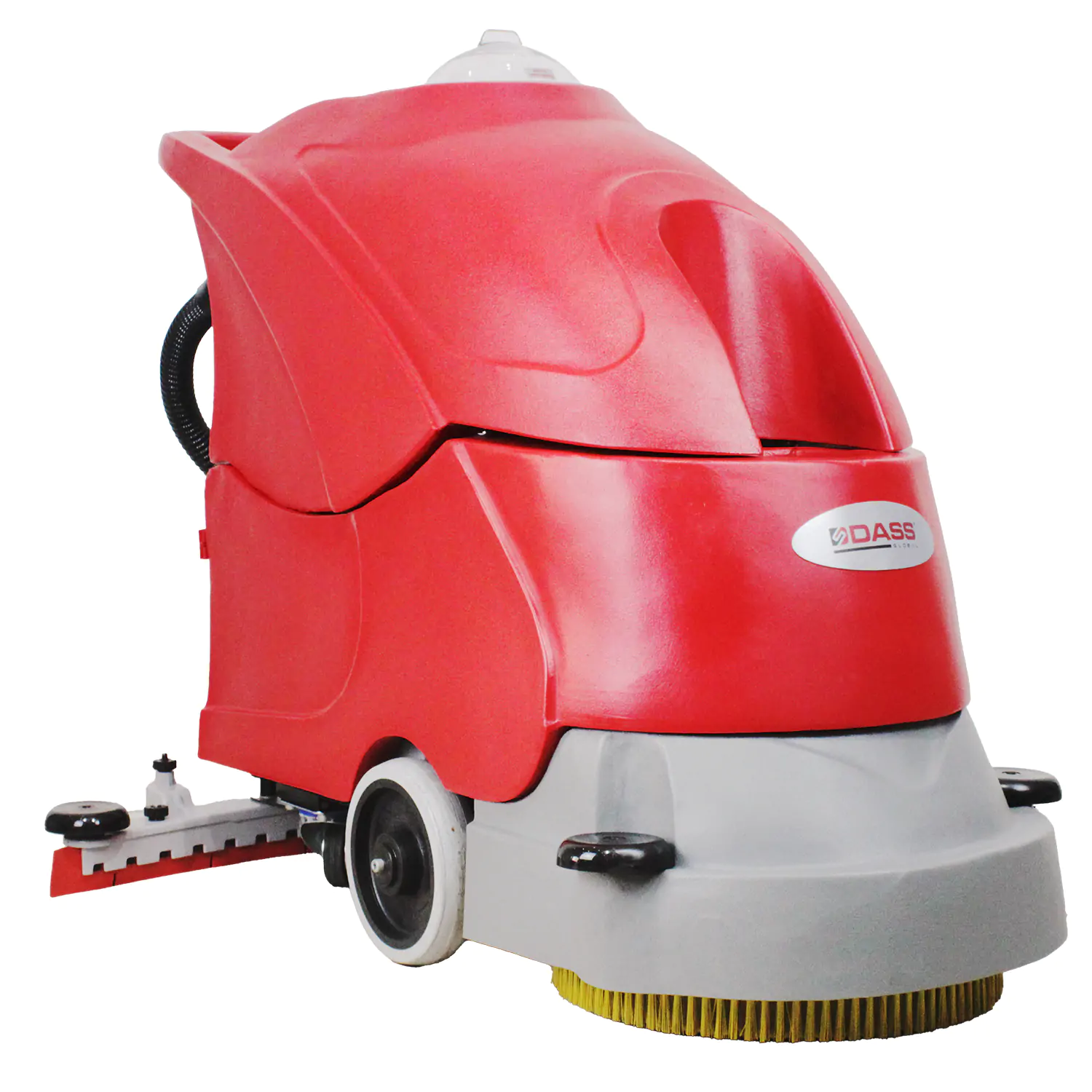
A scrubber dryer is not simply a rotating brush. The cleaning result is created by a sequence: clean solution is applied, the brush separates soil from the floor, the rear squeegee gathers the dirty solution, and the vacuum system transfers it to the recovery tank. If one component is not matched to the site, a powerful-looking machine may leave wet edges, require extra passes or stop repeatedly for filling and emptying.
What does brush diameter affect?
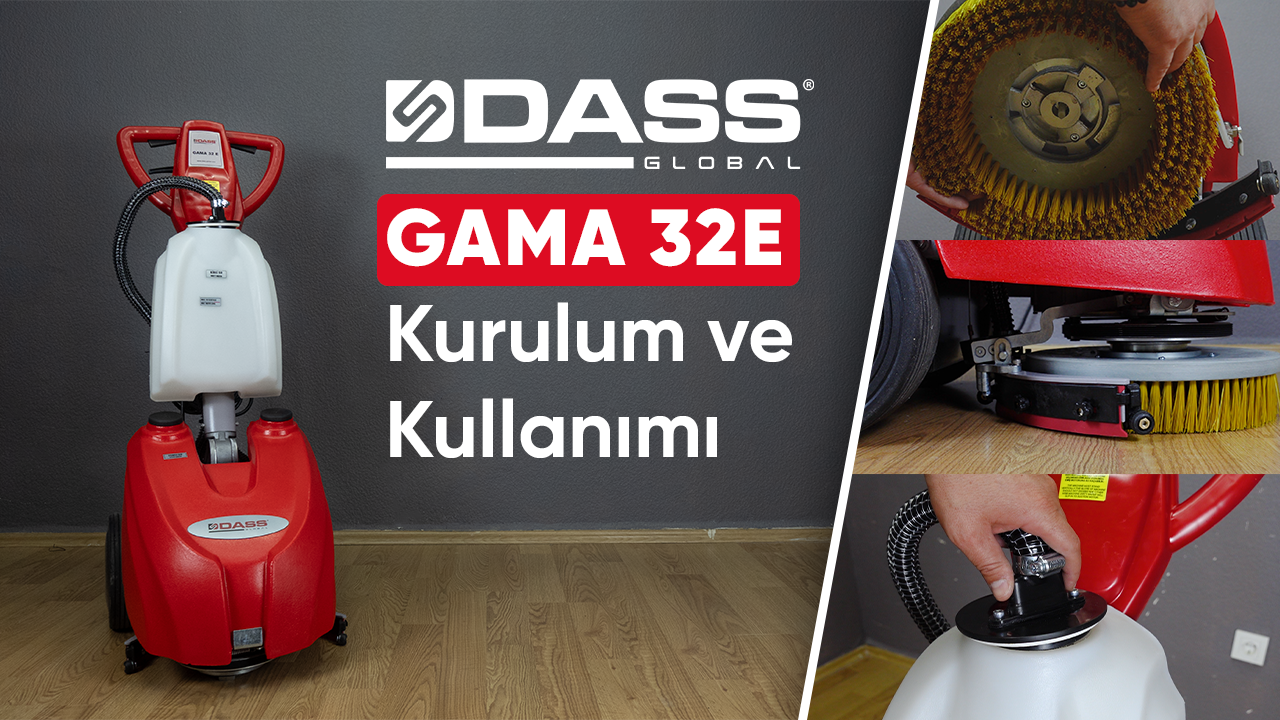
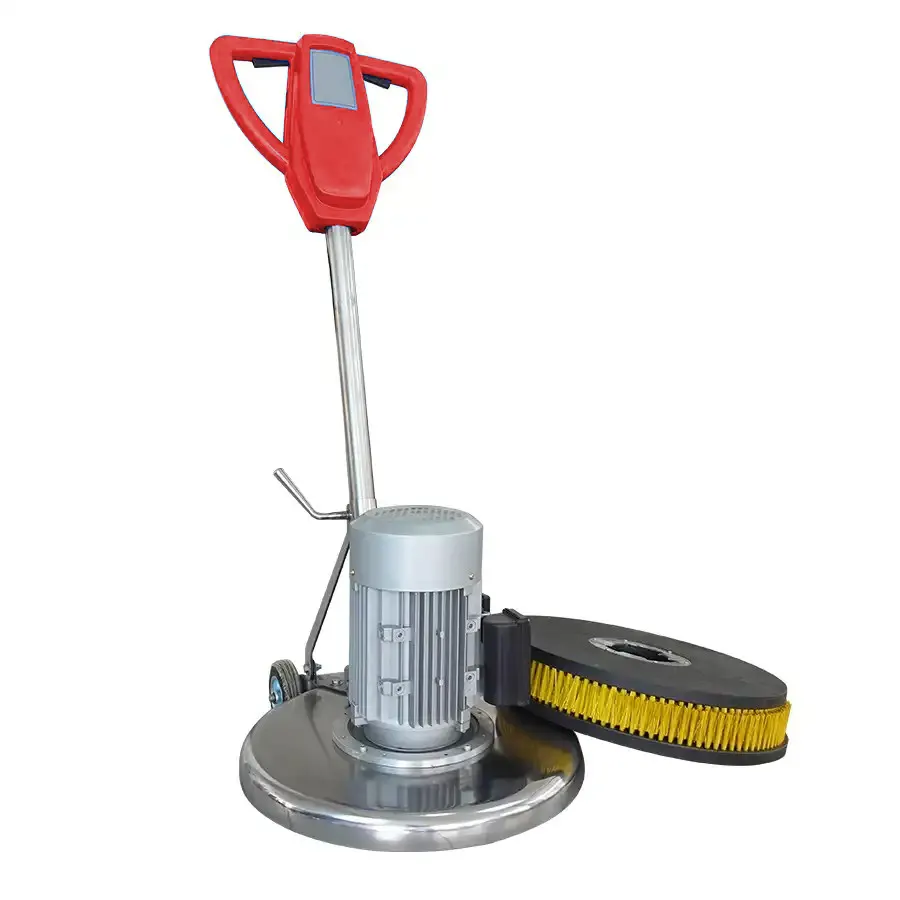
Brush diameter influences the width mechanically scrubbed in one pass. A wider brush can improve coverage in open areas, while a compact brush can manoeuvre more easily around tables, shelving and narrow corridors. A larger brush does not guarantee a better result on every floor. Brush material, contact pressure, rotational speed, machine weight, soil type and travel speed work together.
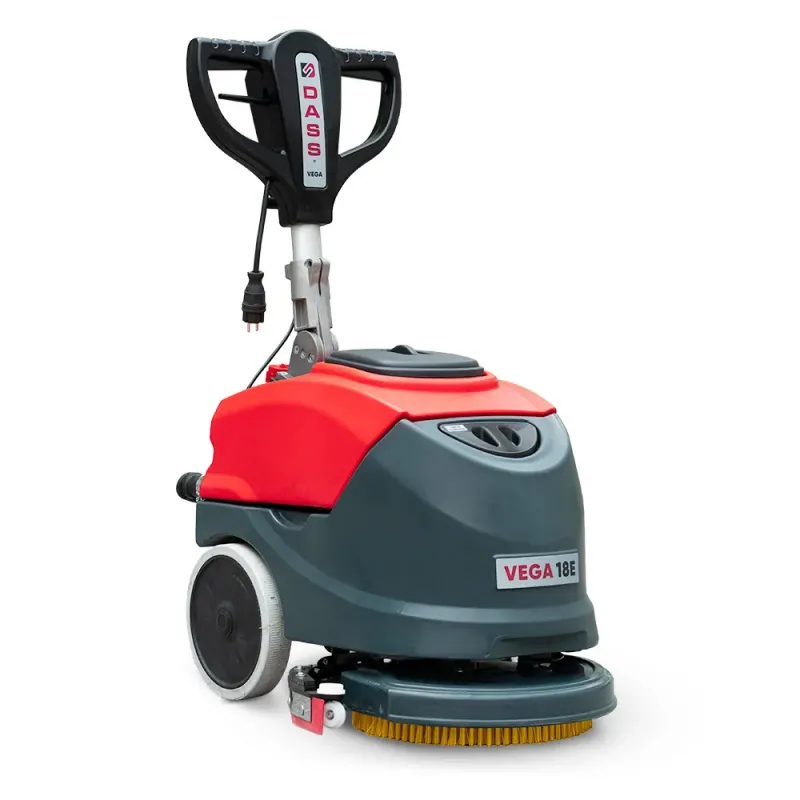
The DASS Vega 18E uses a 320 mm brush at 170 rpm with 14-litre clean-water and 18-litre recovery tanks. The technical table also lists a 500 mm cleaning and recovery width. This difference explains why the brush path and the complete water-recovery path are not the same measurement.
Why is the rear squeegee wider than the brush?
Water moves beyond the direct brush track, particularly during turns. The curved rear squeegee must collect this water before the vacuum system removes it. Therefore, passage planning should not use only brush diameter or body width. Door clearance, shelving gaps, turning area and the wider rear assembly must be considered together.
Does higher brush speed always clean better?
Brush speed affects the number of surface contacts, but it is not a complete performance value. Heavy soil may require suitable detergent, dwell time and controlled travel speed. On a sensitive floor, an aggressive brush or pad can damage the finish. The brush material and the approved chemical process must be selected for the floor before speed is treated as an advantage.
Why must both tanks be evaluated?
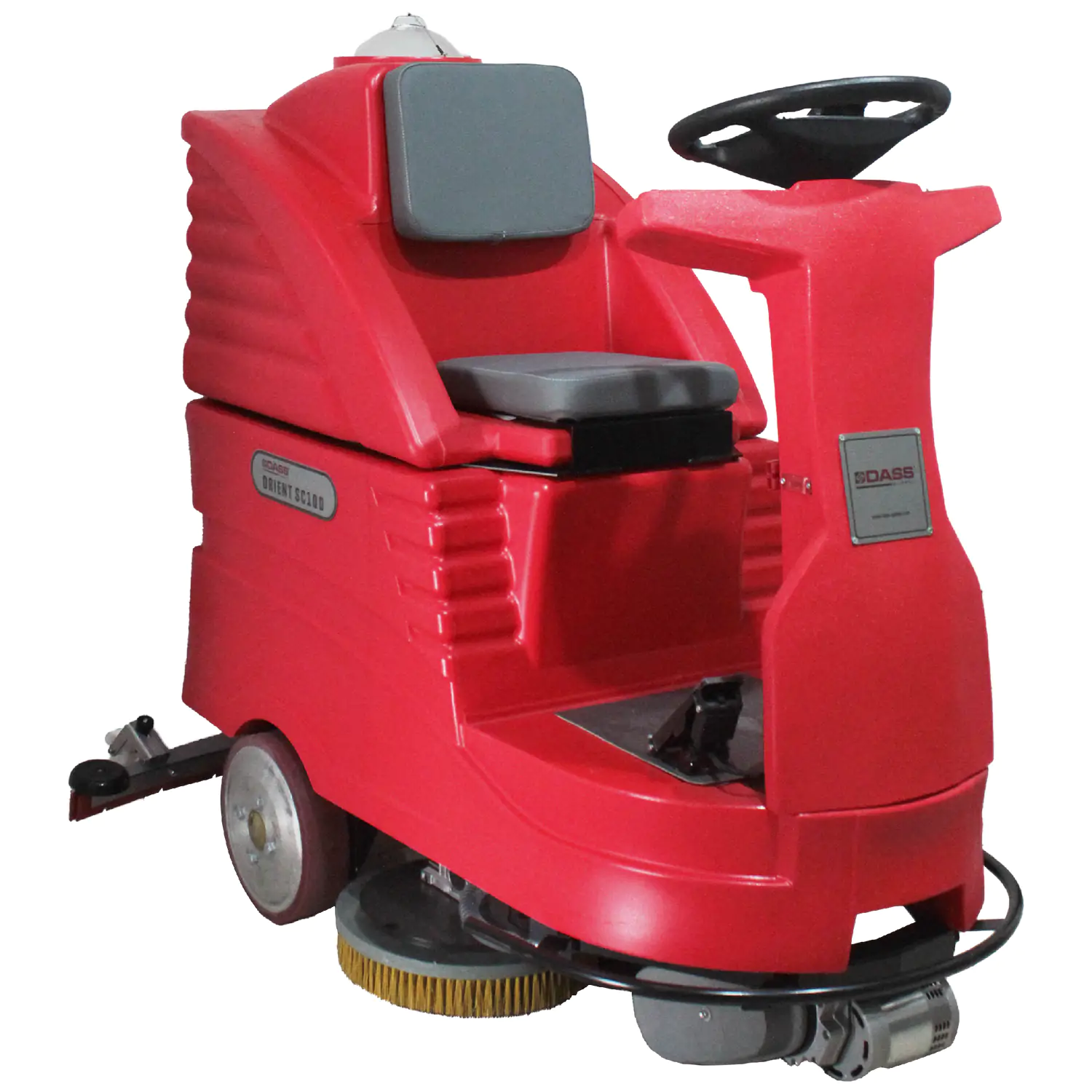
The solution tank determines how much clean mixture is available. The recovery tank determines how much dirty water can be collected. The operating cycle stops when either side reaches its limit. A larger tank can reduce filling and discharge interruptions, but it also increases machine dimensions and mass. For compact work, the 14/18-litre Vega 18 layout supports manoeuvrability. Larger routes may benefit from the 43/49-litre Vega 42 or 61/65-litre Gama 50 tank classes.
Practical specification checklist
- Measure the narrowest door, aisle and turning point, not only the total floor area.
- Match brush or pad material to the floor coating and contamination.
- Confirm that the squeegee and vacuum system can leave the floor safely dry.
- Calculate filling and discharge points along the actual cleaning route.
- For battery models, plan working and charging periods; for corded models, plan sockets and cable routing.
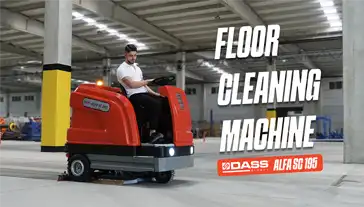
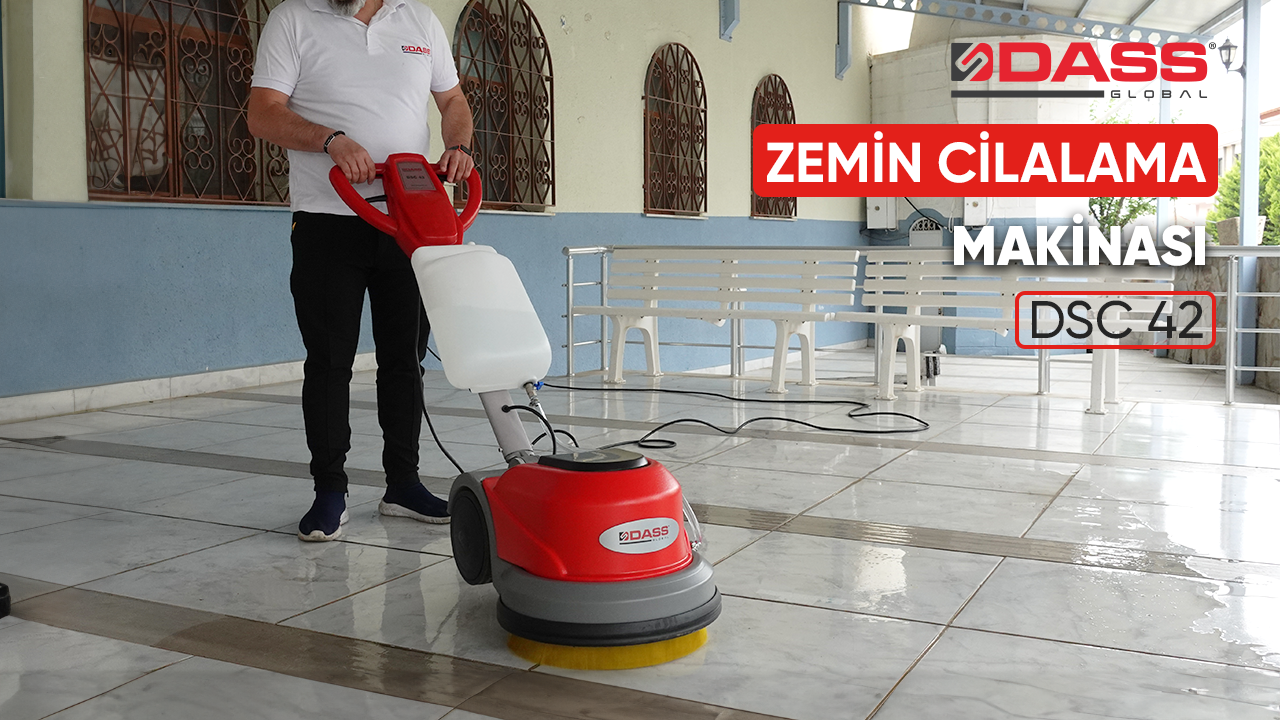
Models such as Vega 18E, Vega 42E and the larger Gama family can be shortlisted through the DASS floor cleaning machine range. The correct choice balances brush, squeegee, tanks and passage geometry on the same route.
Related Products


Leave a Comment